

1. Reduce
The cleanest material is the one you never have to discard. Buy with purpose, avoid unnecessary packaging, and choose durable items when practical.
THE GOOD LOOP
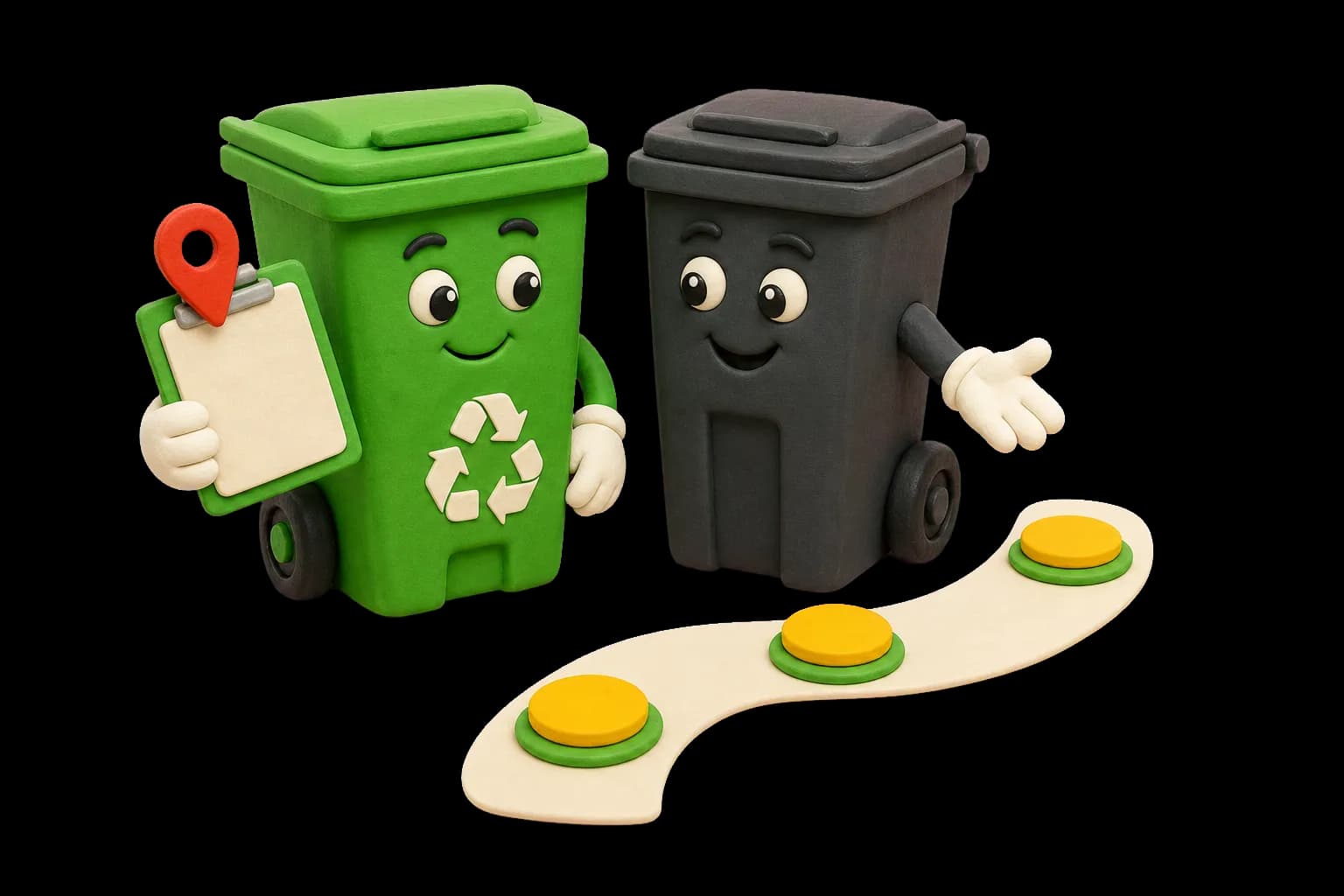
Good Friends is a collection company. Its role is to help a home or business create a clear, workable path for trash and accepted recyclables. That matters, but it does not justify claiming that every item becomes a new product or that one pickup saves a precise amount of carbon. Responsible environmental work begins with honest boundaries.
EPA and Virginia use a waste-management hierarchy that places source reduction and reuse ahead of recycling. The order matters.
The cleanest material is the one you never have to discard. Buy with purpose, avoid unnecessary packaging, and choose durable items when practical.
Repair, refill, share, or donate useful items before treating them as waste. Reuse keeps products working without demanding new raw material.
When reduction and reuse are no longer practical, separate materials accepted by the local program and keep the recycling stream free of obvious contaminants.
The familiar arrows describe a loop. Collection begins it, but sorting, processing, manufacturing, and buying recycled-content products are what keep material moving.
A private hauler or public program collects accepted recyclables. Recovery facilities then sort, clean, and prepare usable material for manufacturing.
Recovered paper, metal, glass, and some plastics can become feedstock for new products when the material meets the processor's requirements.
Choosing products made with recycled content supports demand for recovered material and helps the recycling loop continue beyond the collection truck.
A recycling symbol is not a universal permission slip. Local programs and processors decide what they can accept. When in doubt, ask before setting it out.
Sustainability becomes real in ordinary moments: the choice before something enters a bin, the way a property sets up its collection area, and the care taken before the truck arrives.
Pause before tossing: can the item be repaired, refilled, shared, or donated? When recycling is the right next step, empty it, keep it separate from trash, and follow the rules for the actual address.
A good program is easy to understand. Pair trash and recycling containers, use plain labels, teach the people who use them, and review the setup when the materials or building routine changes.
Keep the collection area accessible, close lids when possible, and do not add a questionable item just because it fits. A quick question before pickup can protect the rest of the load from contamination.
Recycling programs are managed locally. A responsible plan follows the rules for the actual property—not assumptions from another city.
DC requires commercial establishments to recycle. A working program includes separated recyclables, enough containers, and regular pickup by a licensed, registered collector.
DC commercial recycling guidance →Alexandria requires active recycling programs for businesses and multifamily properties. The exact materials and reporting responsibilities depend on the property type.
Alexandria recycling guidance →Virginia's planning hierarchy considers source reduction, reuse, recycling, resource recovery, and disposal—in that order. Local rules still determine what each property can set out.
Virginia waste-planning guidance →Good Friends will start with the real property, ask what it generates, shape the right collection plan, and tell customers when an item needs another path. That practical honesty is how a small local hauler can support cleaner collection areas and a more useful materials system—one stop at a time.
READY FOR THE NEXT STEP?
Or call 703-543-8671